
I am unsure how many of our readers already have reason to celebrate Learning Disability Week, which takes place from today, Monday the 15th of June until Sunday the 21st of June. However collecting and researching is often a task at which we excel, and at which we are very good. I think that is because there is no set way to do it, we can form our own method, and work with the skills we have.
The problem with learning difficulties is that, unlike physical disabilities, they are not immediately apparent, though today many individuals wear lanyards and badges. This year`s theme asks that we take time to learn more about the conditions that we encounter. And if there is an event advertised near you, do go along with an open mind and an open heart.
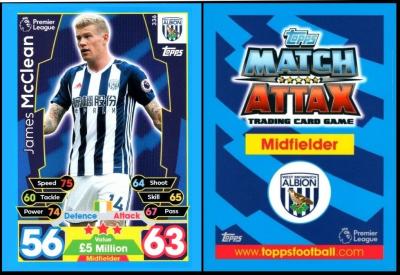
So our first clue, on Saturday the 13th of June, was of James McClean, who was one of the first footballers to admit openly that he is autistic - but he only decided to get himself tested after finding out his daughter was autistic, and realising many of his behaviours mirrored hers. recognizing many similarities between his own traits and those of his young daughter, who is also autistic. In fact he mainly admitted it to show her that everything was possible, despite the diagnosis, but he has gone on to use his social media to support many people, and call for greater awareness of the condition

Our second card, on Sunday the 14th of June, showed Albert Einstein, who comes from a time before learning difficulties were fully understood, but who is thought by many modern researchers to have been dyslexic. Most of this theory revolves around the fact that he was late to discover the power of speech, and only started talking at the age of six. In fact, this condition, which is common to many dyslexics, is today known as "Einstein Sydrome`. But we also know that he struggled with words, being unable to remember or pronounce them, and it is well known that he performed badly at tasks involving reading and spelling. Most of all though, is the fact that he often shut himself off from the outside world in order to work on elaborate codes and formulae,which was a language he could understand, and a system he himself developed to fit his strengths
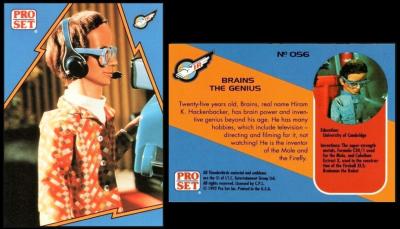
and lastly, on Monday the 8th of June we have Brains, from "Thunderbirds". Now there are two reasons for this, firstly that all learning difficulties are a result of how our brains process language, numbers, and abilities. But secondly if we look at the character Brains, he is described as a scientist, an engineer and the designer of all the machinery and computerisation of International Rescue. We also know that he stuttered when he spoke - and that form of speech disorder, with frequent repetitions and silent sections in which the speaker is struggling to find the right word, is also characteristic of learning difficulties. It is not that they don`t know the word, but they are hunting for it, almost looking through the filing cabinets inside their brain. Gerry Anderson described Brains as being pre-occupied with his work and experiments, but socially unsure of himself, and we know he would have liked to explore him more, but the network thought that Brains` stammering slowed the action, so in the first series he was not used as much as the rest of the cast. Sadly, during the second series, his stammer became less pronounced, and though he was used more, which I think was a missed opportunity for all the children watching, not just because it would have made the condition part of their everyday experience, but also encouraged those who had it themselves to dream of being scientists themselves.
On which note, as always, and especially this week, if anyone else would like to send us any information or scans from their collection which relates in any way to our theme of the week, please do - simply email us at webmaster@card-world.co.uk - and this is the same for any corrections, or for general cartophilic correspondence and chat.
