
In 1903 Emmeline Pankhurst had founded The Women’s Social and Political Union (WSPU), a movement she would lead right the way through until its disbandment in 1918, growing ever more daring in its acts of rebellion.
In September 1908, along with her sister Christabel (also a Suffragette) and another woman, Flora Drummond, she decided to organise what was known as "a rush" on Parliament, storming it like the Bastille; specifically this was aimed at the House of Commons, which was thought to be more sympathetic, being closer to the working man than the House of Lords. The planning took some time, but an enormous crowd of women gathered in Trafalgar Square on Sunday the 11th of October, incited by the fact that two days before the leading trio had been issued with summons after the police had been sent copies of the leaflet organising the rally. In fact police, in plain clothes, were at the rally too. This led to the arrest and detainment of many women, primarily to prevent them attending the "rush"; however sixty thousand people were still there to take part, and there were many attempts to break into the Houses of Parliament through the ranks of policemen, who were protecting it in force.
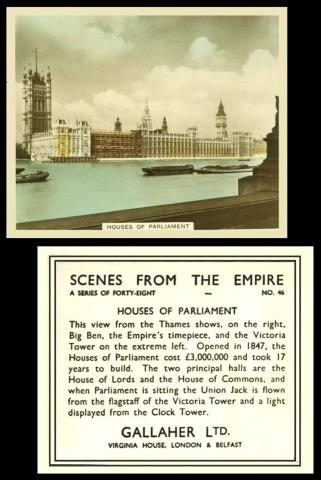
There is also another connection with this card, because in 1911 there was a plan to disrupt the census. The idea was that women would either deface, or destroy the forms, but some went further, and Emily Davison actually hid in a broom cupboard within the Houses of Parliament, staying there for forty-six hours, so that she could record her place of residence as The Palace of Westminster. In actual fact, there is a plaque, in her honour, in that very cupboard.
Unfortunately, her plan ended when she was found, by a cleaner, and arrested. This must have been a male cleaner, I guess, because you would have hoped that a woman would have been more sympathetic to the cause of women`s suffrage and simply closed the door and let her stay. Emily Davison was released without charge, but the census was still able to record, truthfully, that she was "in the Crypt of Westminster Hall, Westminster’.
If you look at the 1911 census more closely though, you will find she is recorded on it twice, once at Parliament and once at home, in Coram Street; where her landlady filled the form in dutifully so that she would not get into trouble.