
Now we are getting to the point of repetition, or rather of my trying to avoid it, hence the sudden idea of the index and gallery. Which we will be doing a bit more on over the weekend
Another thought is that maybe it is time to change to something else, one idea is Counties of the United Kingdom, using the first three cards as a guessing game, and the rest of the week either highlighting any branches or clubs in that area, or looking for unusual references and pictures. There are 110 Counties, so tons of scope, but some may be rather hard to find seven cards for even if we do go off on a considerable tangent.
Any other ideas for changing into the next phase will be gratefully received. Over to you…..
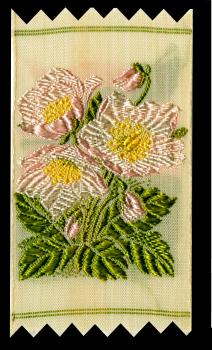
J. WIX & Sons Ltd / `Kensitas` brand [tobacco : UK] "Flowers" - silk - second series (1935) 6/40
Now you will either be filled with excitement or dread by the following fact but today has started to be referred to as LEON Day, especially in America, because today we are half way to Christmas. So we thought we would join in and look forward, though I am not sure I will be playing any Christmas music, like some American radio stations have started to do already.
And if you are still puzzled by LEON, read it backwards….
There are definite pluses to this, you get to find all your lights and see if they work before you put them right around the tree, and you have half a year to sort out suitable presents and cards. And don’t forget you now have half a year to sort out all those unusual Christmas “cards” for us to show in our Cards of the Day.
We have gone for a Kensitas silk here, a Christmas Rose, which is not a rose at all but a hellebore. However its meaning is particularly apt, for it means “Relieve my Anxiety”. Apologies for giving you more of that! Unfortunately it is too late to plant a Christmas Rose in your garden, but do look out for them in the shops as plants nearer the festive season.
This set was issued in this standard size and also in a larger version. The flowers, in both sizes, are :
- Amaryllis.
- Anemone
- Auricula
- Canterbury Bell
- Cardinals Lobelia
- Christmas Rose
- Clematis
- Convolvulus
- Coreopsis
- Cyclamen
- Evening Primrose
- Flax
- Foxglove
- Globe Flower
- Heather
- Hyacinth.
- Italian Borage
- Jonquil
- Marigold
- Monkey Flower
- Monkshood
- Periwinkle
- Pink
- Red Hot Poker
- Thistle
- Thyme
- Valerian
- Verbena
- Viola
- Wallflower
- Blue Sage
- Chicory
- Gladiolus
- House Leek
- London Pride
- Love Lies Bleeding
- Mallow
- Rose Campion
- Speedwell
- Water Lily
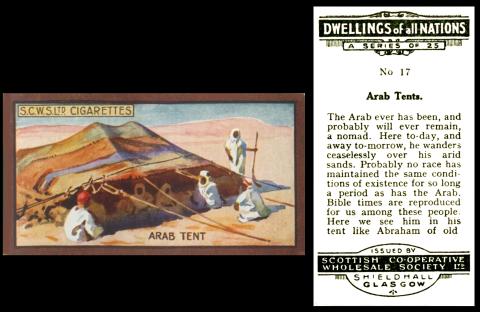
SCOTTISH Co-Operative Wholesale Society Ltd / S.C.W.S. [tobacco : UK - Scotland - Glasgow] "Dwellings of All Nations" (1924) 17/23
Today is going to be the #GreatAmericanBackyardCampout, and the start of #NationalCampingWeek. And we are not talking about glamping, of course, which to me would be no fun at all.
I know that most of us are not in America, but there is something wonderful about being in a tent amongst the elements, even in the rain, so why not have a go? Your children and grandchildren would be excited by joining in with the adventure too. As long as it has windows of course, but that is just one of my own personal hang ups, though I found out there is a tent that you fit over the back of your vehicle and lets you sleep in the car so you can look out of the windscreen and get out of the door.
There are three main sets, or should that be sites, to find cigarette cards of tents.
The first of these is on scouting cards, and the most common are the so called Bell Tents, which are named for their shape, and have one pole up the centre of the inner room, which leaves a hole at the top for ventilation (and rain if you don’t do it right, but I never said I was any good at camping, I only said I enjoyed doing it). They are not all bell tents, on Gallaher “Boy Scout Series” 25/100 there is a tent made on the spur of the moment from pieces of canvas and a selection of scout’s poles lashed together with ropes.
Another happy hunting ground is on cards of the Army in the First World War. Most of these are the same design, which is not so surprising as the scouts were run on very similar lines and often used surplus equipment.
Lastly, but not leastly, some people live in a tent for always. Ah, what fun that would be. Three of these can be seen in the Scottish Co-operative Wholesale Society set “Dwellings of all Nations” (1924) - a North American Indian Tipi, which is card 9/25 – a Turkestan with a kibitka which is a kind of yurt-y bell tent and can be seen on 19/25 – and our card, an Arab tent, number 17/25.
Now you may be wondering why I picked that? Well it is colourful, and rather romantic, and gives clear vision. And this would be the one I would have most pleasure looking at the stars through. And what else could anyone ask?
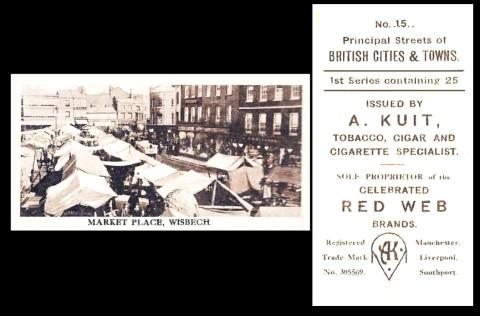
A. Kuit [tobacco : UK - Manchester] "British Cities and Towns" (1916) 15/25
Today is an odd one, but perhaps very relevant to some of us, for it is Micro, Small and Medium-sized Enterprises Day - or MSME Day for short. In case you are wondering what an MSME is, well it is a business that employs less than 250 people. So hands up if you have less than 250 staff, and sell cards, ephemera, or card storage, either as your entire stock or as a part of it. And I should imagine that was most of our dealers.
As for this card, it was issued by a firm called A. Kuit, who later became a Limited Company. Their head office was at 68, Deansgate, in Manchester, which, since 1995, has been part of a Wetherspoon public house called The Moon Under the Water. However before that it was the Deansgate Picture House, which opened in January 1914, and which means Kuit must have gone by even then. And that is the main problem with this set, because the date is usually given as 1916, something that we know cannot be true.
The Deansgate Picture House ticked along very well until the late 1920s, then started the next decade with a makeover by George Allen Fortesque ARIBA, and reopened in November 1930. But seven years later it had been amalgamated into the H.D. Moorhouse Circuit, and would pass through the hands of Brennan’s Cinemas Ltd before being taken over by Associated British Cinemas in 1959. They kept it going and expanded another screen where the former picturegoer`s cafe had been. Eventually the cinema would occupy numbers 68, 70, 72 and 74 Deansgate. But Cannon took it over in the mid 1980s and closed it on August the 9th, 1990.
As for Kuit themselves all I have is the entry in our "Directory of British Issuers", which reads :
- A. Kuit (afterwards A. Kuit Ltd) (defunct).
Head office : 68 Deansgate, Manchester (Manchester, Liverpool & Stockport)
"Red Web" brands.
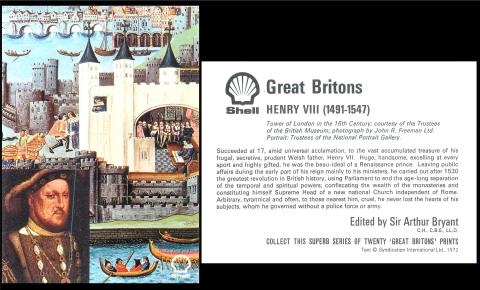
SHELL [trade : petrol stations : UK] "Great Britons" (1972) Un/20
Today in 1491 saw the birth of a baby who would become Henry VIII, but by accident, as he was the second son of Henry VII and Elizabeth of York, and only became first in line in 1502 on the death of his brother Prince Arthur, killed by an illness still unattributed, but thought to either be plague, flu, or consumption, when he was only fifteen and a half. Elizabeth of York also had the illness, but somehow pulled through.
Because little Henry was not expected to be King at all, there is little information about his early years. A bit more notice was taken of him after his brother’s death, and more once he became Prince of Wales in 1504, then became King in 1509, aged just eighteen.
He is always shown as a large man and unwieldy of frame, but in his youth he was strong and slim; he only grew larger as he aged, and this created many of the health problems that would send him to his death in 1547.
He is also famous for his six wives, not all of whom were his choice. Indeed, his first was found him by his father, in 1503, in order to make an allegiance with Spain, and its goods; but she was six years older and already widowed, and Henry was only twelve years old, even below the age of consent for the time. They did not marry until 1509, and possibly only then because it was his father’s dying wish. Most of his marriages were unsuccessful and the only one he felt true love for, Jane Seymour, died in childbirth.
You will find thirty cards of Henry VIII at the New York Public Library to start you off, but not what is thought to be the earliest.That was issued in 1880 by P.H. Mayo and Brother, with Cut Plug tobacco “for chewing and smoking”: however some discount it because it is in a series called “Shakespeare Characters”
rather than a true and proper set of Kings and Queens, whilst some like it simply because another of the cards in the set shows his first wife, Catherine of Arragon (yes, that is how they spell it). These cards are plain backed, and are often found trimmed.
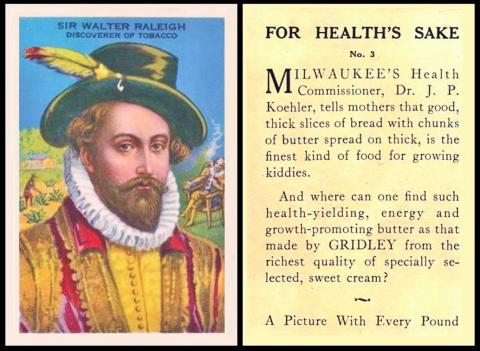
Gridley Dairy Company [trade : butter : O/S - Milwaukee, Wisconsin, U.S.A.] "Heroes of History" (1927) 3/48 - F.130
Today in 1620 the King of England banned commercial tobacco growing in England, a strange move which gave the power to the Virginia Company, who would pay a duty tax on imports of a shilling per pound weight.
Virginia Tobacco is the most popular type of tobacco and the name is from the region in which it was first grown about four hundred years ago, give or take a day. The Native Indians grew tobacco, but the seeds which made the Virginia tobacco were actually imported; you might be amused that they are related to the nicotiana seeds that you might grow in your garden. The soil in Virginia was new to growing, and had not been cultivated nor improved, this meant that the seeds struggled to find a way through and anything to feed off and they were, dare I say, a bit weedy. However it was not all bad because the leaves were more pliant and easier to work with and the taste was much calmer for people who found the so called Spanish tobacco too rich.
Virginia was first explored by Sir Walter Raleigh, after being given the right to do so by Her Majesty Queen Elizabeth I. He is supposed to have also brought the first tobacco home from Virginia, in 1586, but this has now been discounted as British sailors were known to indulge in the habit some decades prior. However Raleigh definitely brought some tobacco back and claimed it as a new discovery, good for the health, and it was soon all the rage.
Gridley Butter was a popular sweet cream butter brand. By the mid 1920s the dairy was the largest in Wisconsin, and the way it worked was to be the buyer of all milk produced by the smaller local dairies and then to refine it, bottle it, and sell it. They lasted until 1942, and were then bought out, by Gail Borden. These cards were issued inside the packaging of each pound weight of butter and with other dairy products.
Now you may be wondering how we have a title for thiis set, when there is none on the cards, and that`s a pretty fascinating tale. You see this set had already been issued, in 1911, with tobacco, by the American Tobacco Company, under the title of "Heroes of History", and it was issued with several of their brands, namely `Miners Extra`, `Natural Leaf Scrap`, `Pan Handle Scrap`, and `Royal Bengals` - however those sets had a biography on the back, which the Gridley Dairy cards do not. This has led to the belief that Gridley either got hold of the artwork for the fronts and were forced to make their own backs, or they got both lots of the artwork, or maybe even a set of cards to copy, but they decided that the back was too much hassle to alter so they discarded that and made their own text.
There are two further anomalies. Firstly the American Tobacco Company issued a hundred cards, Gridly only forty-eight. And secondly, our version has been reversed, so that Walter Raleigh looks out of the picture towards the right of the screen, whereas in the American Tobacco version he looks out towards the left. This also affects the people in the vignettes beside his head and they also change sides.
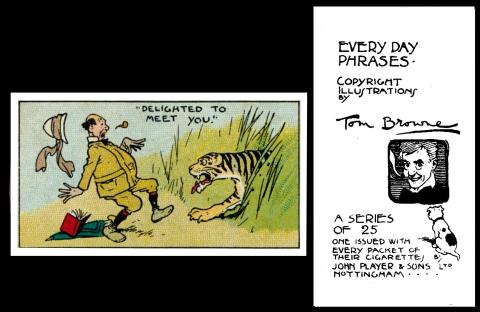
John Player [tobacco : UK] "Everyday Phrases by Tom Browne" (1901) Un/25
Since 2010, today has been Social Media Day, so we thought we would join in. It seems that not many of our readers have climbed aboard that ship yet, so lets have a chat about why not. I have to admit I am not totally comfortable with it, but my enjoyment is growing steadily, because, like most things, if you stand at the edge and look in, things are never quite so much fun as they are when you are taking part.
Time is my enemy, for I dont have that much internet access. However this weekend I plan to restructure my days, so let us see what that will result in.
There are several sources of social media.
Facebook started in 2004, but I did not take to this so much, possibly because I would rather have a few close friends and not tell anyone about them than I would boast of having millions that I did not know the slightest thing about. But then that is just me! And if you really enjoy it, and find it useful in your collecting let us know.
Twitter works much the same, you post comments of less than 140 characters on about what you are currently doing, and hope someone sees them, and comments as well. There is some wonderful content on here, lots of auctions and wistful things like @aamilne. However there are lots of card collectors and dealers on here so do go and have a look round.
Instagram is mostly pictures, and again there are some super cards and ephemera. One tip is that often a person has the same name on twitter and instagram, which is prefixed with an @
Mastodon is probably new to you, but it operates both the same and differently to the above. You can upload text only or photos. The different bit is that it is not designed as a brag fest, where you boast about how many followers you have or how many likes, they don`t even have likes, only favourites, where you add the post to your holding cell to look at in the future wherever you like. And there are cards here as well.
I am going to be honest, I like the back of this card much better than the front, with the cute little dog, and Thomas Arthur "Tom" Browne himself. And you can read all about him at Wikipedia/TomBrowne However, for some reason it is really hard to find a thank you - and not just on a cigarette card, for sadly I find them very few and far between in the real world as well, and those that I do come across become very treasured indeed. And it costs nothing to say it either. So lets make 2023 the year when we sprinkle a few about, and watch the recipient purr with pleasure....
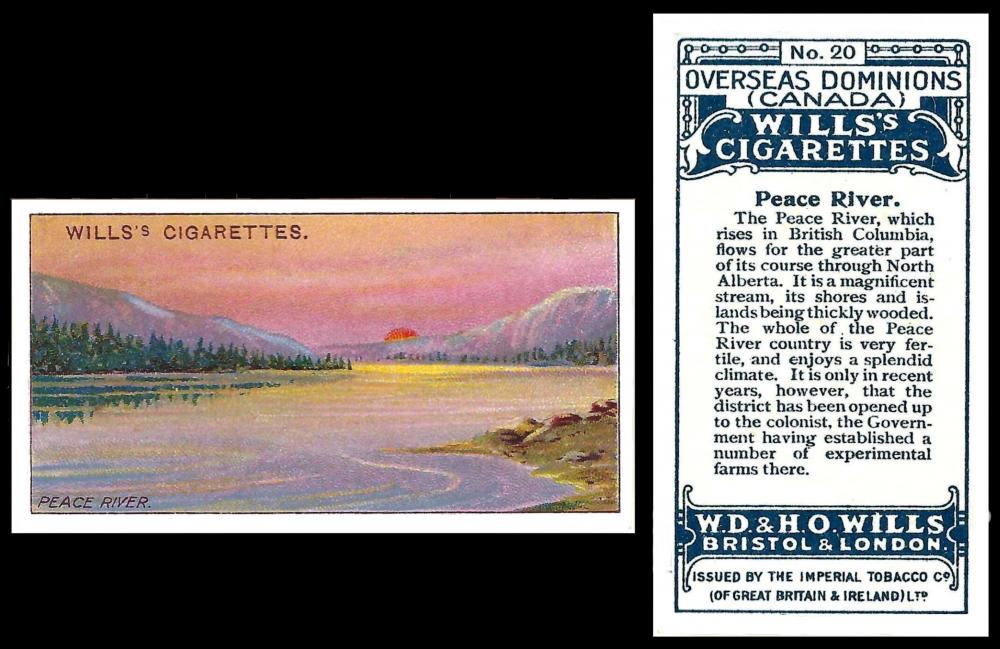
W.D. & H.O. WILLS [tobacco : UK - Bristol] "Overseas Dominions (Canada)" (1914) 20/50
Today was once Dominion Day and now it is Canada Day. In fact if you are reading this is Canada you are probably not at work, because it is also a national holiday.
It was today in 1867 that Nova Scotia and New Brunswick joined up with Canada and became a Dominion, which was then called Canada.
In 1914, W. D. & H.O. Wills issued this set of fifty cards called "Overseas Dominions (Canada). This set aimed to show the wonders of a life in Canada, in order to encourage settlement, so it features images of many of the major places including Ottawa, Quebec, Montreal, Winnipeg, Halifax and Toronto, as well as the larger industries and employers, lumber, fishing, and farming.
These were tough jobs but Canada only needed tough people who could support themselves and be useful to their new land. So there were also cards to show that it was not just a wild untamed land, cards 38 to 41 showing the Parliament Buildings in Quebec, the Government Buildings in Winnipeg (39) and Halifax (40) and the Parliament Buildings in Victoria.
#CanadaDay #OhCanada #DominionDay
This week's Cards of the Day...
... have been recording seafarers week, so plenty of scope there! We have also found a couple of sea related scarcities, on which note, if we are going to have a gallery added to this site, we welcome, or more correctly encourage, your scans of your really rare cards, front and back. We will do the job of finding a way to fit them in to our system and talk about them as either the Card of the Day or in the Weekend Newsletter. And you do not need to publish your name, for we are perfectly happy to say “A collector” and leave it at that - though anyone who does want to be linked with their wonders is welcome to ask that their name be added so that their card goes on remaining part of their collection until the end of time.
Saturday, 18th June 2022
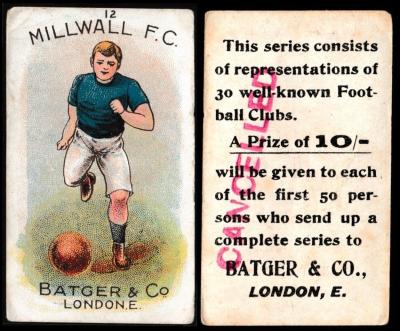
So here, many thanks to CardhawkUK, we have a truly amazing Card of the Day. And this link goes to a page of delights which also includes the story of the company.
Batger & Co, of "Ratcliff and London, E" first appears in our original British Trade Index part 1, RB.25, published in 1962. This volume covers all trade cards up to 1945.
In there, it tells us that Batger issued cards between 1905 and 1915, and that the cards were redeemed against prizes. As you can see, once redeemed they were stamped "CANCELLED" right across the back so that they could not be used in the prize scheme for a second time. However that has led to some confusion - some collectors saying that they were stamped and returned to the sender, whilst others say they were stamped and thrown away. I am not sure why they would bother to stamp them only to throw them away, but the cards are very rare, and if they were returned to the sender then surely there would be more of them about.
The actual cataloguing of the set is as follows : "WELL-KNOWN FOOTBALL CLUBS. Sm. 66 x 38. Nd. (30)"
And in case you were wondering why this is BAV-2, well BAV-1 was awarded to their set of twenty advertisement cards, each of which shows a different example of their confectionery.
In our updated British Trade Index, RB.125, printed in 2006, the text above is reprinted without alteration. However three advertisement cards for Jersey Caramels had been discovered, which have been slotted in before the advertisements we mentioned before.
Now though we know there are thirty cards, quite a few have not yet been discovered, as you will see if you click the link - so if you can add any names to the league, please do. Tell us too if you see the missing cards online, because the information is what we are after.
Also, just like the Maynards set, which is somewhere on our web but I cannot find, do notice that these Batger cards recycled the same images, changing the colours of the strips but keeping the players in the same positions - as you will see if you look at cards 2 and 27 - 3, 12 and 26 - 4 and 30 - 5, 23 and 28 - 10 and 20 - 11, 13, 14 and 21
- and 12 and 26
There is only one version of card 17, the goalkeeper, (at the moment), but cards 1,6,7,8,9,15,16,18,19,22,24,25 and 29 are yet to be discovered. Maybe you have them? If so. do tell us
Sunday, 19th June 2022
![P644-910 : P72-25.1 - RB17/4A [tobacco : UK] John Player “Advertisement Card 1929” – untitled (1929) 1/1](/sites/default/files/styles/content_aligned/public/2022-06/19%20sailor%20advert.jpg?itok=YJ4Y2JHO)
Here we have a single card that was inserted into packets as an advertisement, but much later than those which began the John Player story in 1893 - 1894.
It shows a sailor, calm and stoic, with a hat tally that links him to H.M.S. Invincible, which is a change from the original Player’s Sailor, whose hat band said H.M.S. Hero, though in fact if you look really closely the life belted head on the reverse of this card still says that, and clearly reads "H.M.S. Hero". Now Wikipedia/Hero tells of eight ships called H.M.S. Hero but none of them were sailing at the time of this card’s issue, and there was also no H.M.S. Invincible in 1929 either, so if anyone knows what is going on there, please pass us the info.
Even curiouser there is a set of John Player playing cards issued around the same time which also has the same dual band situation, the sailor on the back of each card having H.M.S. Invincible on his hat band, and the head on the ace having H.M.S. Hero.
Anyway the set is described in the original John Player reference book RB.17, issued in 1950, as :
- 4. ADVERTISEMENT CARD - 1929. (adopted title). Front per. Fig,4 in colour. Back in grey, inscribed "It`s the Tobacco that Counts", with "Player`s Please" above and below Sailor and Life-belt trade mark. Unnumbered. One subject only as illustrated in Fig.4
A. Small card
B. Large card
Although issued in the U.K., the cards do not bear the I.T.C. Clause, and are therefore recorded as a Miscellaneous issue. January 1929.
The reason for the two sizes is that the larger size would have been in the larger packets, on which I guess that type collectors can decide for themselves if they call it a set of one or a set of two. I don’t have the larger size, if anyone does it might be fun to add it and allow your fellow collectors to visually compare the two.
In the London Cigarette Card Catalogue of 1950 both were available, however, they retailed at 1/6d for the standard size and 5/- for the large, so the larger size must have been less easy for them to acquire, and presumably for collectors as well.
Monday, 20th June 2022
![W675-649 : W62-450 : W/255A [tobacco : UK] W.D. & H.O. Wills “Lighthouses” (1925-1930?) 35/50](/sites/default/files/styles/content_aligned/public/2022-06/20%20lighthouses%20%281%29.jpg?itok=Ml3dnaO7)
The lighthouse is truly the seafarers friend, not only a light to illuminate their path, but a beacon shining in the darkness, and a refuge if the calmness of the sea allows for rowing boats after all else is lost.
This entire set is devoted to these majestic structures but Old Cresset St. Agnes is rather a favourite, for it shows that even when we had no electricity we still found a way to make darkness into light. Mind you for some reason, although it deals with the earliest history of these structures it is card 35, over halfway through. The lighthouse mentioned as being the first (yes I have given up trying to get those letters in the right order!) was actually at Sigeum near Troy, and the “..old lighthouse..” which was one of the seven wonders of the world was of course The Pharos of Alexandria.
The Wills archives tell us is that this set was issued in July 1926 with Three Castles brand in New Zealand. It was also issued anonymously as a general overseas issue by British American Tobacco in the same month and year. In our original Wills Reference Book the two sets were included together, hence the A suffix, there being a B for the anonymous, but for the World Tobacco Issues Indexes they were split away as two separate sets, the anonymous was moved to the Z section. In 1956 this was coded as ZB6-43 and for the most up to date version it has become ZB07-460.
Tuesday, 21st June 2022
![S70-12 : S474-540 [tobacco : UK] John Sinclair Ltd “British Sea Dogs” (1928) 22/50](/sites/default/files/styles/content_aligned/public/2022-06/21%20sea%20dogs.jpg?itok=O4ukYCKV)
John Sinclair was based in Newcastle-on-Tyne, with premises in Bath Lane, and a factory called Barney`s Tobacco Works. No, I don’t know who Barney was – do you? I have found out that Barneys Tobacco was made for John Sinclair but Murrays took it over. It is no longer made though.
Anyway John Sinclair was founded in 1856, and claimed to be the first company to issue cigarettes in the North of England, under the brand name of “American Cocktail”; but surely cocktails only came along in the 1920s and 30s. The issuer Robert Sinclair, also of Newcastle-on-Tyne was actually a breakaway, their partnership being dissolved in 1885. this was one of the last sets they issued before they were acquired by Carreras in the 1930s. The set is a popular one and was reproduced in 1997.
It is quite unusual to have a card of a diver like this, but if you look hard you may find a few more. This one is especially interesting because it is stated to be “A Diver Time of the Great War”, and it is really hard to find any mention of divers during the conflict apart from just five, who you can discover at History.com - is this card really one of those men?
There is a set of fifty cards which was issued by Victoria Gallery, these are called “Deep Sea Diving” and it is really hard to find out anything about them, I cant even find a picture of a back, but they look very interesting.
Wednesday, 22nd June 2022
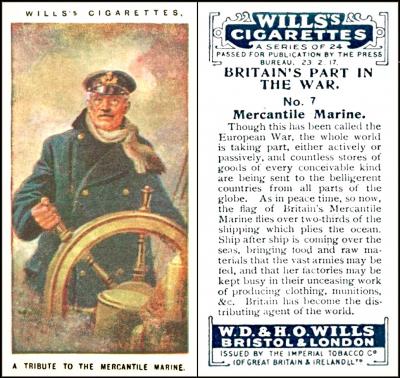
If you look in the header box on his card you will see that these were “Passed for Publication by the Press Bureau 23.2.17”, a kind of censorship test to ensure that no information on the cards could be useful to the other side.
The set was not issued for export, and perhaps that is why, though it does include cards of other Allied Nations, the ANZACs for one, and it would have been good for them to be allowed to see their work, and sacrifice, was appreciated by being included in this set.
This card is about the Mercantile Marine, and the text seems to be an attempt to prove that whatever the U-Boats did, we could take it, for “…ship after ship is coming over the sea, bringing food and raw materials that the vast armies may be fed, and that her factories may be kept busy in their unceasing work of producing clothing, munitions, &c”.
In truth the Merchant Navy faced a deadly foe, and many sailors were lost, so much so that they had a special medal at the end of the First World War, called the Mercantile Marine War Medal, first awarded in 1919 for just “one or more voyages” or “at least six months service”.
It is estimated that during the actual War, (not including the aftermath, when mines were still bobbing about across the seaways) 3,000 vessels were lost, and over 18,000 men, all of whom were simply sailors, not military ones, and not even part of the Royal Navy. In fact many men were not known, because civilians employed on seafaring vessels did not even get on the register until War broke out, and the records that were so hastily made then were also lost.
By the way, in case you were wondering about this strange term “Mercantile Marine”, yes, it is the Merchant Navy, but it was not called so until 1928, and only then by a strange default, when the Prince of Wales, the future Edward VIII, was granted the title of Master of the Merchant Navy and Fishing Fleet.
Thursday, 23rd June 2022
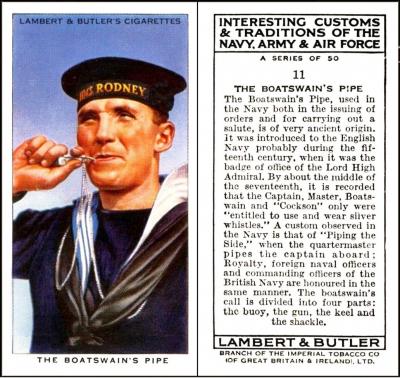
This card shows something known to, and remembered fondly by all sailors, the boatswain`s pipe, the call of which gives orders, welcomes sailors aboard, and makes it known when higher ranks are arriving.
They are quite collectable now, and were often silver; however, just like cards, there are modern reproductions.
This cap tally is for HMS Rodney, sister ship of HMS Nelson, who entered service with the Royal Navy in 1925 or 1928, saw service in the Second World War in Norway, the Mediterranean, including the Normandy landings and the Atlantic.
Her general claim to fame was that she was present at the sinking of the Bismarck in 1941. But she was also featured on a series of 48 photographic cigarette cards called "The Navy" which was issued in 1937 by Pattrieouex, and on Gallaher`s coloured set "The Navy" Some of these cards are actually the same, look at just one "Spit and Polish", which is a close up on card 20 of the Gallaher coloured set and just the left hand man off card 43 of the Pattrieouex photographic set.
Despite these, she was scrapped in 1948. The reason given was that she had been overused and not maintained, and she was now in too poor a condition to refit and save. The suggestion of a dry dock and museum was apparently not suggested.
Friday, 24th June 2022

This young man is Boy, 1st Class, John Travers Cornwell, aged 16½. He was a boy scout, and had joined the Navy at the age of 15, without telling his family, his references coming from his headmaster, and from a man for whom he was working as a delivery boy.
Our card says he was “mortally wounded in Battle of Jutland”, this was on the 31st of May 1916, when his ship was attacked by several German Cruisers. At the time he was working on the deck with one of the guns, doing the job of making sure the gun sights were true and the range was accurate. He did this by turning tiny wheels when ordered to by the men in command, just one of the jobs that the “boys” with small fingers were so much better at. His gun received several direct hits and was just a gun, no armour surrounding it, so all the men were immediately downed. John Travers Cornwell was also wounded but propped himself up for fifteen minutes in the hope that a new crew arrived. He died the next day, before his mother could reach the hospital. His Victoria Cross is held by the Imperial War Museum,
You can also find him on Godfrey Phillips "Famous Minors" (card 9/50), where it gives his birth date as 1899 - and on Godfrey Phillips "Famous Boys" (card 5/25), where he is shown loading a shell into the breech, which I am not certain was one of his jobs, and where he is named as Jack Cornwell. It also tells us that he was "buried first in a common grave, he was afterwards reinterred with full naval honours in a private grave in Manor Park Cemetery. Homes for disabled and invalided sailors have been established in his memory.
That common grave was also in Manor Park Cemetery, and he was exhumed on the 29th of July 1916 when he was reburied with full military honours. His father, who died of bronchitis whilst away at war, was also buried in the same grave, on the 31st of October 1916.
Considering the Victoria Cross was only awarded as a great honour, it is chastening to think that eight series of twenty five cards were able to be issued in 1915-1916 alone,. two hundred souls whose bravery was such that it needed to be recorded with the V.C., and, like John Travers Cornwell, most of whom were not alive to receive it, nor even to know it had been awarded. I find it one of the most poignant sets of all.
There is something else which will astound you - for during this research I discovered that J.T. Cornwell was not the youngest recipient of the Victoria Cross, two others being younger.
Andrew Fitzgibbon was born in India on the 13th of May 1845, and won his V.C.for events on the 21st of August 1860 at Taku Forts, aged fifteen years three months, and he survived, until 1883 - he is also hopefully still wearing his V.C., for it was buried on his breast.
Thomas Flynn, or Flinn was born in Athlone in August 1892, and won his V.C.at Cawnpore in India on the 28th of November, when, though he was only on the field as a drummer, he joined in the fighting against the opposition. The problem is that there is no record of the day of his birth, so we do not know whether he is the youngest of all, or not. Sadly he fell on hard times when leaving the forces, and died, in the Athlone Workhouse, in August 1892, being buried in what is called "common ground". There is no record of what happened to his V.C., or where it is today.
As this is a Card of the Day, and the first card to be featured as so from all the other series, this becomes the set`s homepage, to which all the series will link, and from which you can link out to see all the others.
It first appears in our original Gallaher reference book, RB.4, published in 1944. At this time, we did not add reference numbers, which is why the earliest card code is the G12-20 that comes from our original World Tobacco Issues Index. The sets are described as :
1915 (?). 25. THE GREAT WAR - VICTORIA CROSS HEROES (titled series). Size 2 1/2" x 1 1/2" approx. Numbered 1-25. Fronts printed in colour by letterpress from half-tone blocks, blue marginal lines, white margins and titles inset in white panels (head and shoulder studies showing V.Cs). Backs printed in violet with descriptions and "Issued by Gallaher Ltd., Belfast & London."
Cards can be collected with the backs printed in various shades of purple, mauve and violet.
Variety :
Card No.7, Capt. Dimmer Card No.7, Brig-Gen DimmerTHE GREAT WAR - VICTORIA CROSS HEROES (titled series "2nd Series of 25") Numbered 26-50. Other details as above, but different subjects.
THE GREAT WAR - VICTORIA CROSS HEROES (titled series "3rd Series of 25") Numbered 51-75. Other details as above, but different subjects.
THE GREAT WAR - VICTORIA CROSS HEROES (titled series "4th Series of 25") Numbered 76-100. Other details as above, but different subjects.
THE GREAT WAR - VICTORIA CROSS HEROES (titled series "5th Series of 25") Numbered 101-125. Other details as above, but different subjects.
THE GREAT WAR - VICTORIA CROSS HEROES (titled series "6th Series of 25") Numbered 126-150. Other details as above, but different subjects.
THE GREAT WAR - VICTORIA CROSS HEROES (titled series "7th Series of 25") Numbered 151-175. Other details as above, but different subjects.
THE GREAT WAR - VICTORIA CROSS HEROES (titled series "8th Series of 25") Numbered 176-200. Other details as above, but different subjects.
The shade of "violet" ink varies considerably between the series,
This has, understandably, been much shortened in our original World Tobacco Issues Index, to just :
THE GREAT WAR - VICTORIA CROSS HEROES. Sm. See X1/Ha.492.A ... G12-20
1. "1st Series". Nd. 1/25 (25)
2. "2nd Series". Nd. 26/50 (25)
3. "3rd Series". Nd. 51/75 (25)
4. "4th Series". Nd. 76/100 (25)
5. "5th Series". Nd. 101/125 (25)
6, "6th Series". Nd. 126/150 (25)
7. "7th Series". Nd. 151/175 (25)
8, "8th Series". Nd. 176/200 (25)
The reference to X1/Ha.492.A, however, which is in the accompanying handbook, is very important, as it reads :
THE GREAT WAR - VICTORIA CROSS HEROES. Front in colour. Numbered series.
A. Gallaher. 1st to 8th Series. Nd 1/200
B. Machado. 1st Series. Nd 1/50. Back illustrated at Fig,X1/Ha.492.3
Time for a little chat about B. and J.B. Machado, whose company was allied to British American Tobacco. They were actually brothers, Benito and Juan, and they were Cuban, presumably from the area of Santiago-de-Cuba. They left their homeland in a time of conflict, and set up in Jamaica. Now Jamaica was not really a tobacco country, so they had their pick of the land, and also lots of people to introduce to the habit.
One of the places they chose for the growing was Temple Hall, which proves that they knew their stuff, for tobacco was one of the crops grown on that very land by Sir Nicholas Lawes, the Governor of Jamaica from 1718 until 1722, and the husband of the daughter of the original owner Thomas Temple. This is just nine miles from Kingston. Whilst the other site they chose was at Colbeck, about twenty-six miles from Kingston, which was soon to become home to many other refugees of the war that had driven our brothers away. The reason why we are speaking of Kingston is on the cards, for these give an address, of " "La Tropical" Cigarette Factory, Kingston, Jamaica, B.W.I." That was opened in 1875, at No.9, Harbour Street, which was perfect for exporting purposes, (right until the 1950s, the Machado brand was one of the best sellers in England). It also seems that all of their workers were Cuban, presumably refugees. .
The Machado cards have different backs, and are printed in olive green. I will insert one in here asap, but it will not be the same as our card as far as the number. There is much debate as to the Machado set and we welcome input from researchers - especially as to whether the numbering is the same, for the Gallaher set was only of twenty-five cards. We also have no idea of why they issued the set (in 1916), nor why they stopped after the first fifty. There is a really well researched piece about Machado online at flickr as part of the National Library of Jamaica, but it does not answer our cartophilic curiosity.
now we will close with the thought that this is not the end for we are going to crack on with that index and gallery and maybe by the end of the weekend there will be some major progress.
once that is there I can start adding in other information as I work (slowly) through the magazine library
Sleep well whilst I am working, and see you all next week